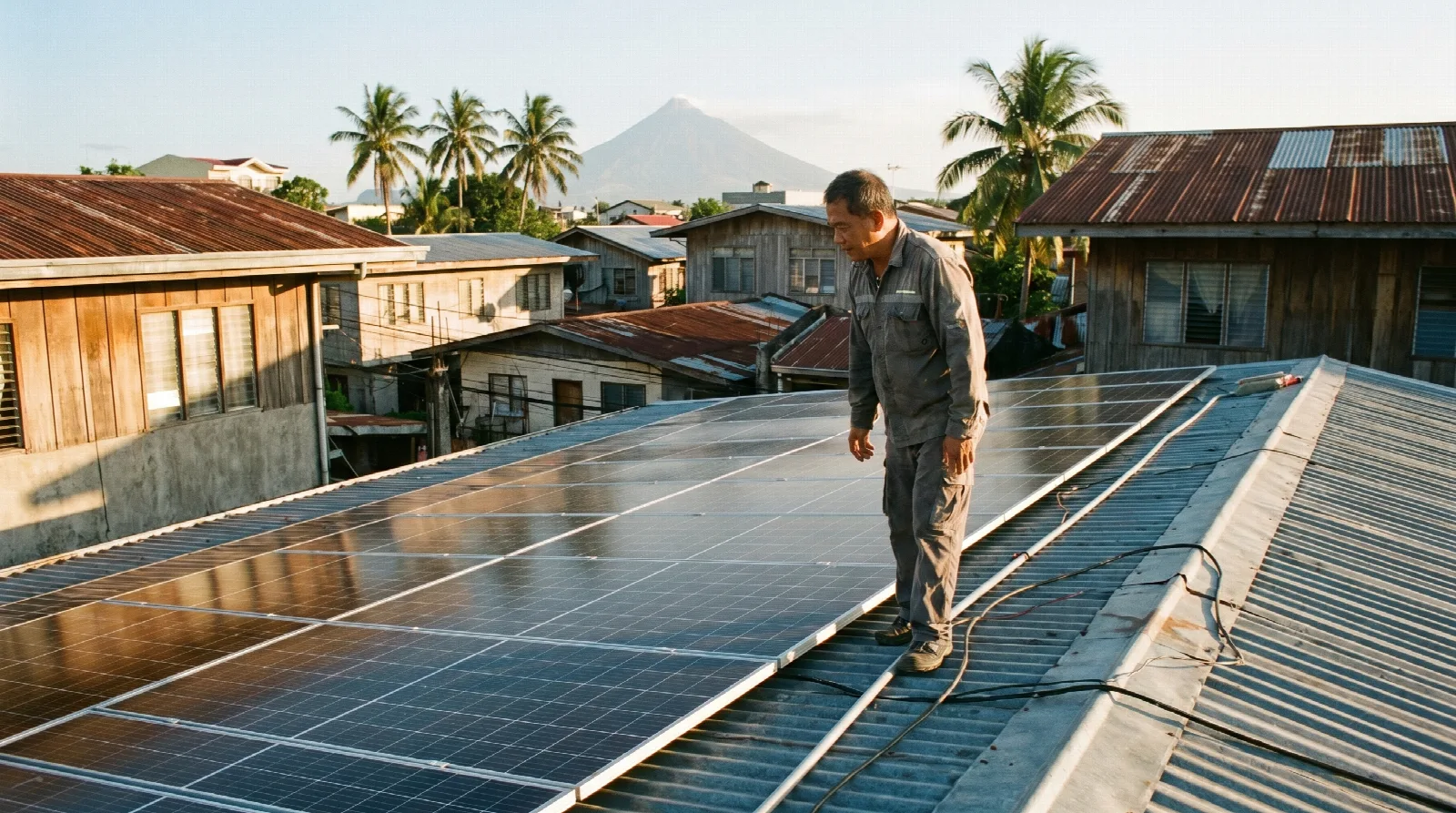
Home solar can feel complicated at first because every conversation seems to introduce a new word: inverter, kWh, net metering, hybrid, battery, payback, export, backup loads. The simple version is this: a home solar system lets your house use electricity made on your own roof during daylight hours.
For many Philippine homeowners, the goal is not to become fully independent from the grid on day one. The practical goal is usually to reduce daytime grid use, lower part of the electric bill, and understand whether backup power or future expansion should be part of the design.
What home solar means in practical terms
Solar panels produce electricity when sunlight reaches them. That electricity moves through an inverter so it can be used by normal household appliances. When your appliances are running while the system is producing, the home can use solar power first and draw less electricity from the grid.
That does not mean the electric bill automatically disappears. Most homes still use power at night, during heavy rain, or when appliance demand is higher than solar production. The final bill depends on system size, usage habits, export rules, utility billing, and whether batteries are included.
- Solar produces during daylight, not at night.
- The home benefits most when daytime appliances overlap with solar production.
- Grid power may still be used when solar is not enough.
- Brownout backup requires the right inverter, wiring, and often batteries.
The main parts of a home solar system
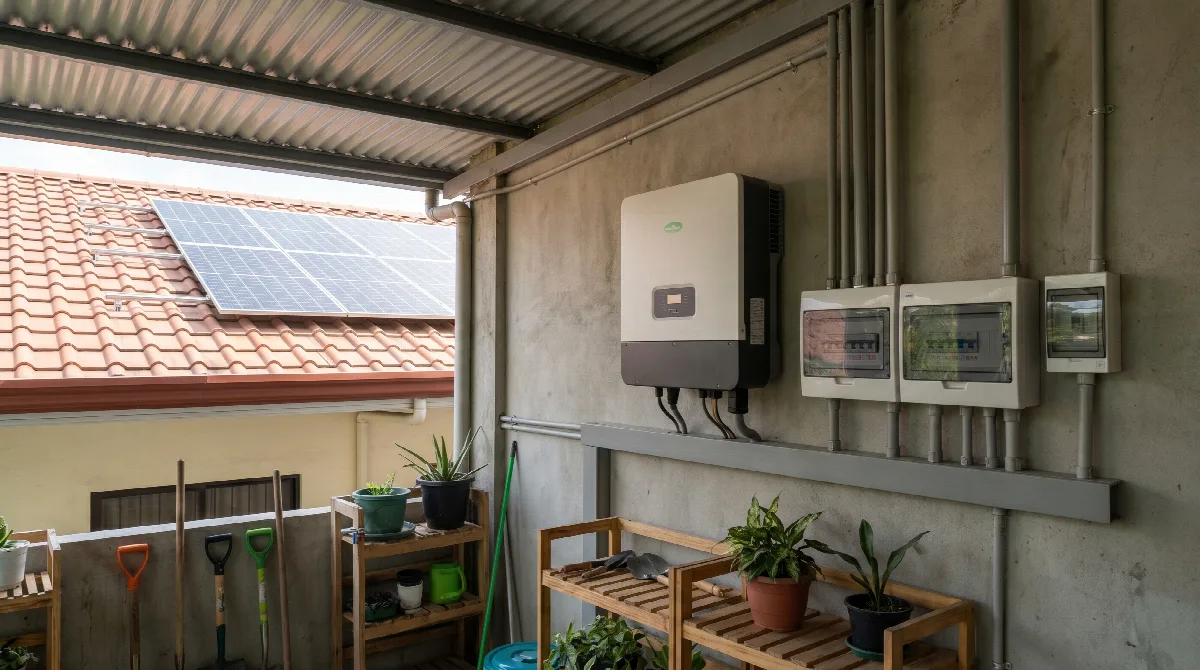
A proposal is easier to read when you know what each part does. The panels are only the most visible piece. The inverter, mounting, wiring, protection devices, and monitoring setup are just as important to how the system performs and how easy it is to own.
- Panels convert sunlight into direct-current electricity.
- The inverter converts solar electricity into usable household power.
- Mounting hardware secures the panels to the roof structure.
- Wiring, breakers, grounding, and protection devices help the system operate safely.
- Monitoring lets you see production and notice problems early.
- Batteries store energy when the homeowner chooses a hybrid or backup design.
Grid-tied, hybrid, and off-grid solar at a glance
Most residential solar conversations in the Philippines fall into three broad system types. A grid-tied system focuses on reducing grid electricity use while the utility grid remains available. A hybrid system combines solar with batteries and can support selected loads during outages if designed that way. An off-grid system is built for places without reliable grid access and needs more careful battery and load planning.
The important beginner lesson is that brownout backup is not automatic. A basic grid-tied system may shut down during an outage for safety. If backup is one of your goals, say that early so the installer designs around specific appliances and circuits instead of assuming the whole house will run normally.
- Choose grid-tied when the main goal is bill reduction and the grid is usually available.
- Choose hybrid when backup for selected loads is important and the budget allows batteries.
- Choose off-grid only when the home truly needs to operate without normal grid service.
What affects whether solar is a good fit
A high electric bill can be a reason to look at solar, but the bill amount alone is not enough. The monthly kWh usage, the time of day appliances run, and the roof conditions all change the recommendation. Two homes with the same bill can need very different systems.
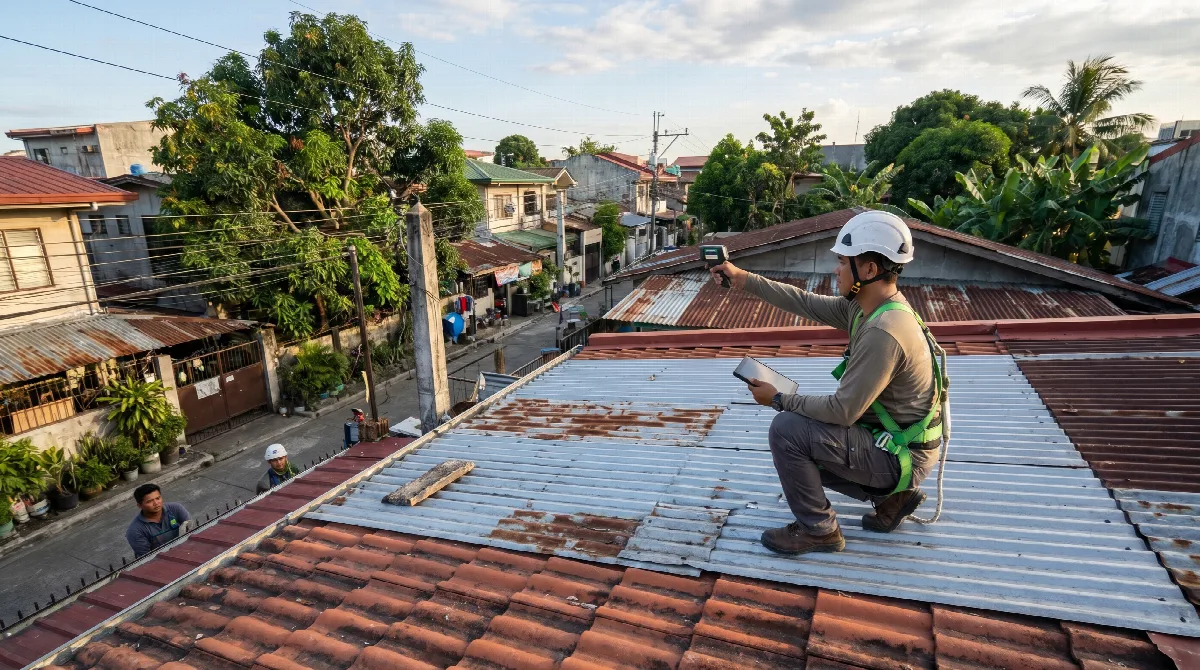
Roof condition matters because panels are long-term equipment. If the roof is rusty, leaking, shaded, too weak, or likely to be replaced soon, the solar decision should wait until the roof plan is clear. Shade from trees, walls, water tanks, and nearby buildings can also reduce output.
- Look at kWh usage, not only pesos paid.
- Check how much electricity is used during daytime.
- Review roof direction, shade, usable space, and roof condition.
- Think about how long you plan to stay in the home.
- Separate bill-savings goals from backup-power goals.
How homeowners should think about cost and savings
Solar cost changes with system size, equipment, installation complexity, roof work, batteries, permits, and utility coordination. This is why broad price claims can be misleading. A smaller clean installation can be more straightforward than a larger system on a difficult roof with shade and battery backup.
Savings are also not only about how many panels fit. Savings depend on how much solar the home uses directly, how exported electricity is handled, and how the household uses power after installation. A good proposal should show expected production, assumptions, equipment, warranty terms, and exclusions.
What to prepare before asking for quotes
You can get better proposals by preparing a few details before contacting installers. This does not replace a site survey, but it helps the conversation start in the right place.
- Recent electric bills showing monthly kWh usage.
- Photos of the roof, meter area, panel board, and possible inverter location.
- A list of appliances that usually run during daytime.
- A list of appliances you want available during brownouts, if backup is a goal.
- Any future plans such as air conditioners, renovation, electric cooking, or an electric vehicle.
- Your preferred priority: lower bill, backup power, long-term resilience, or future expansion.
Common beginner mistakes to avoid
- Assuming solar automatically powers the whole home during brownouts.
- Choosing a system only because it has the most panels.
- Ignoring shade, roof condition, and electrical readiness.
- Comparing quotes without checking exact equipment, warranties, and scope.
- Treating battery backup as a small add-on instead of a separate design decision.
- Believing one online estimate can replace a proper site assessment.
The simple next step
Start with your usage and your goal. If the goal is bill reduction, focus on monthly kWh, daytime loads, roof conditions, and quote assumptions. If the goal is brownout backup, list the essential appliances and ask for a hybrid design that explains backed-up circuits and expected runtime.
Home solar can be valuable in the Philippines, but the best system is not the biggest system or the cheapest system. It is the system that fits the home, the roof, the utility situation, the household routine, and the owner's long-term plans.